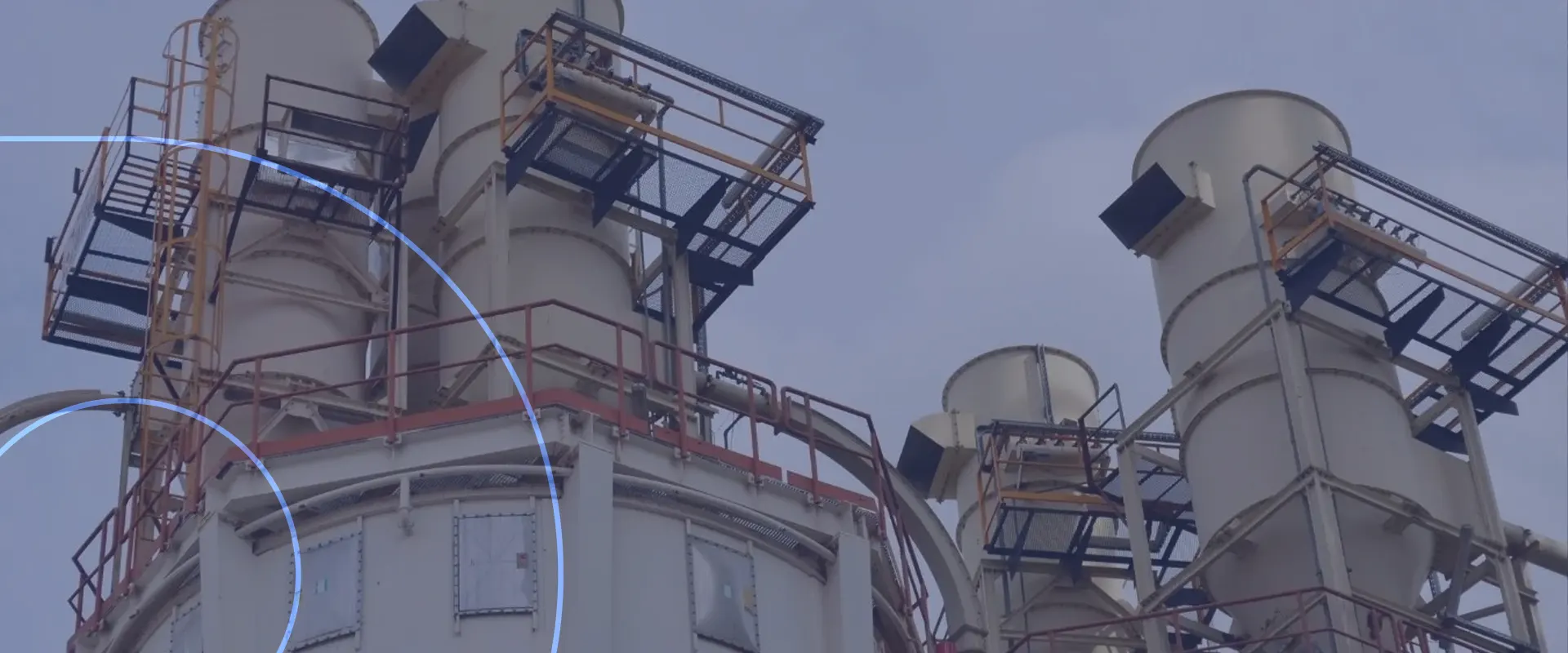
Maintaining air quality in industrial production facilities is not only an environmental responsibility but also a legal requirement and a fundamental aspect of occupational health. Especially in dust-intensive industries, jet-pulse filters that capture particles at the source play a critical role in keeping emission levels within regulatory limits while ensuring a safe working environment. Alfer Engineering provides engineering-driven solutions to meet this vital need through advanced filtration technologies.
Airborne particles and fine dust can cause serious respiratory diseases when exposure is prolonged. Occupational health and safety (OHS) standards require that these risks be eliminated at their source. Jet-pulse filters, with their high suction capacity and efficient cleaning mechanisms, offer the following key benefits:
Unlike conventional bag filters, jet-pulse filters stand out with their continuous operation capability. At the core of the system is a high-pressure air pulse mechanism that cleans filter bags without interrupting production.
During operation, sensors continuously monitor the dust load on the filter bags through differential pressure measurements. When a predefined threshold is reached, high-pressure air pulses are injected in reverse direction, dislodging the accumulated dust. Thanks to this intelligent cleaning mechanism, jet-pulse filters maintain high performance without requiring system shutdown.
Filter units designed by Alfer can achieve emission levels as low as 1 mg/m³. This means even the finest dust particles are effectively captured before being released into the atmosphere.
Controlling emission levels is a critical parameter for sustainable industrial operations. Regulations such as industrial air pollution control standards require strict monitoring of particulate emissions.
Jet-pulse filters provided by Alfer enable facilities to meet these regulatory requirements effectively. A properly designed and optimized filtration system not only eliminates the risk of environmental penalties but also strengthens the company’s image as an environmentally responsible organization.
The success of a filtration system depends not only on the quality of filter bags but also on the overall system design. Alfer Engineering designs each project based on the specific dust characteristics and airflow requirements of the facility.
Why are jet-pulse filters more efficient than other filter types?
They do not require production shutdown for cleaning and use high-pressure air pulses to clean filter bags more effectively, extending filter life.
How is the filter bag selected?
Selection depends on dust temperature, moisture content, chemical composition (acidic or alkaline), and particle size. Materials such as Nomex, polyester, or other technical fabrics are used accordingly.
Is a filter alone sufficient to reduce emissions?
No. A properly sized industrial fan and well-designed duct system must work in harmony with the filter to ensure overall efficiency.
In which industries are jet-pulse filters used?
They are widely used in cement, steel, food processing, furniture, chemical, and mining industries—essentially in any industrial process where dust is generated.
How often should filter maintenance be performed?
Maintenance intervals should be determined by monitoring differential pressure indicators. With regular servicing, jet-pulse filters can operate reliably for many years.
To ensure full compliance with regulations and maximize workplace safety, discover Alfer Engineering’s high-efficiency jet-pulse filters and advanced filtration solutions today.
We use internet data cookies to improve our service quality. For detailed information, see our Cookie Policy page.
