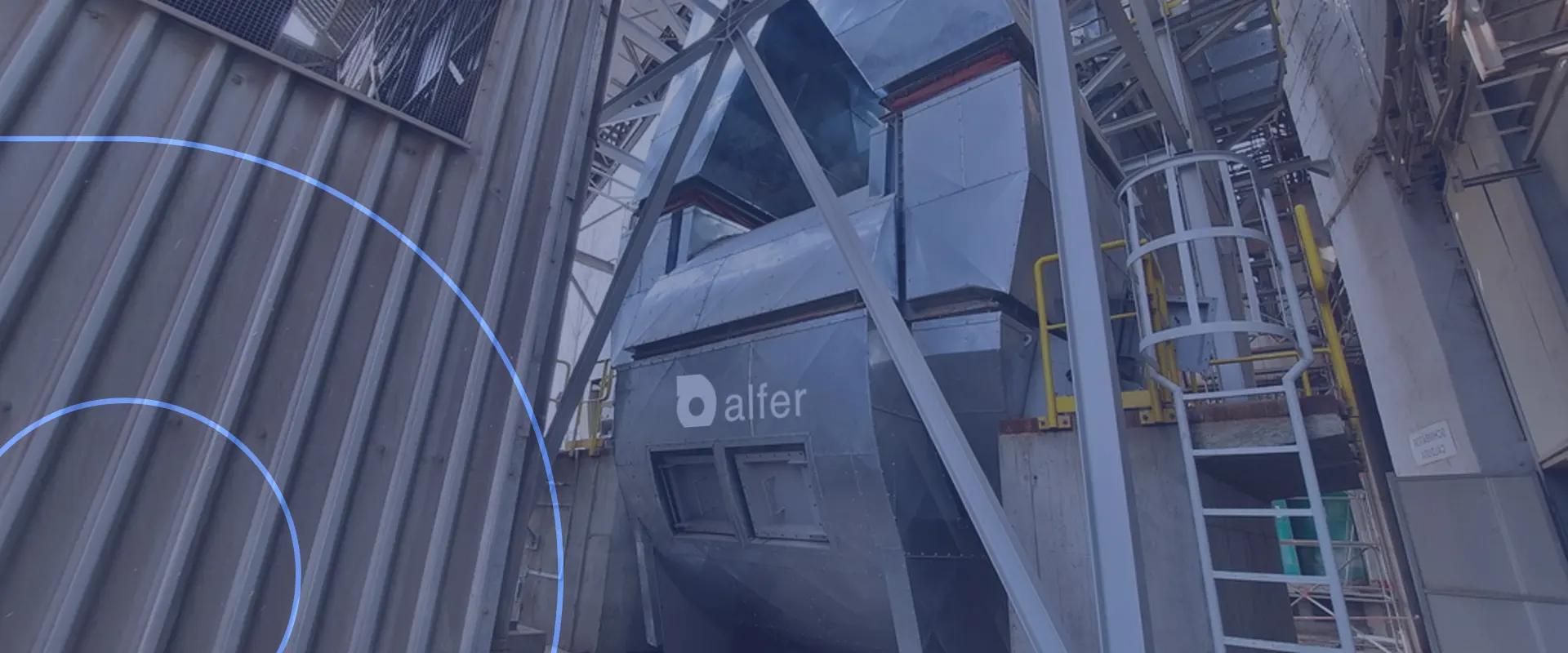
In industrial facilities, production continuity and energy efficiency largely depend on the performance of the equipment in use. Over time, changing process conditions, increasing capacity demands, and equipment wear can cause systems to lose their initial efficiency. At this point, retrofit and upgrading applications for industrial fan systems emerge as a key engineering approach to re-optimize existing infrastructure.
Upgrading is not limited to replacing faulty components. When properly planned, it enhances the performance of industrial fan systems, providing both cost advantages and operational continuity for businesses.
Industrial fan systems operate under harsh conditions for extended periods, which can lead to performance degradation. The main reasons include:
Under such conditions, industrial fan systems may fail to deliver the required airflow and pressure levels, leading to increased operating costs.
The first step in the retrofit process is a detailed evaluation of the current industrial fan systems. Field measurements, pressure losses, and airflow data are analyzed to understand system performance.
Based on these analyses, fan geometry, blade structure, and system layout are re-optimized. This ensures that industrial fan systems are aligned with current process requirements.
The upgrading process is carried out with minimal downtime as a priority. Once the modernized systems are commissioned, performance improvements can be observed in a short time.
Retrofit and upgrading projects offer several important advantages for industrial fan systems:
Optimized fan systems can deliver the same or higher performance with lower energy consumption, leading to significant reductions in operating costs.
With the right engineering approach, the capacity of existing systems can be enhanced. This allows production increases without the need for major new investments.
Upgraded fan components and improved designs contribute to longer system lifespan and more reliable operation.
Modernized systems enable more predictable maintenance planning and reduce the risk of unplanned downtime.
Alfer Engineering approaches retrofit and upgrading projects for industrial fan systems not only at the equipment level but as part of an integrated system. Process conditions, site dynamics, and energy targets are evaluated together to develop project-specific solutions.
These improvements enhance not only system performance but also energy efficiency and operational reliability.
In industrial facilities, replacing an entire system is not always the most effective solution. With properly planned retrofit and upgrading strategies, industrial fan systems can be transformed into more efficient, reliable, and sustainable solutions. This approach helps businesses optimize costs while achieving long-term performance goals.
When should industrial fan systems be upgraded?
When performance decline, increased energy consumption, or process changes are observed.
What is the difference between retrofit and new system installation?
Retrofit focuses on optimizing existing systems, while new installation involves building a system from scratch.
Can energy savings be achieved?
Yes. Proper optimization can lead to significant improvements in energy efficiency.
Can every fan system be upgraded?
Most systems can be improved through proper engineering analysis.
Does the upgrading process require stopping production?
With proper planning, downtime can be minimized.
For more information and tailored solutions, you can contact Alfer Engineering’s expert team.
We use internet data cookies to improve our service quality. For detailed information, see our Cookie Policy page.
