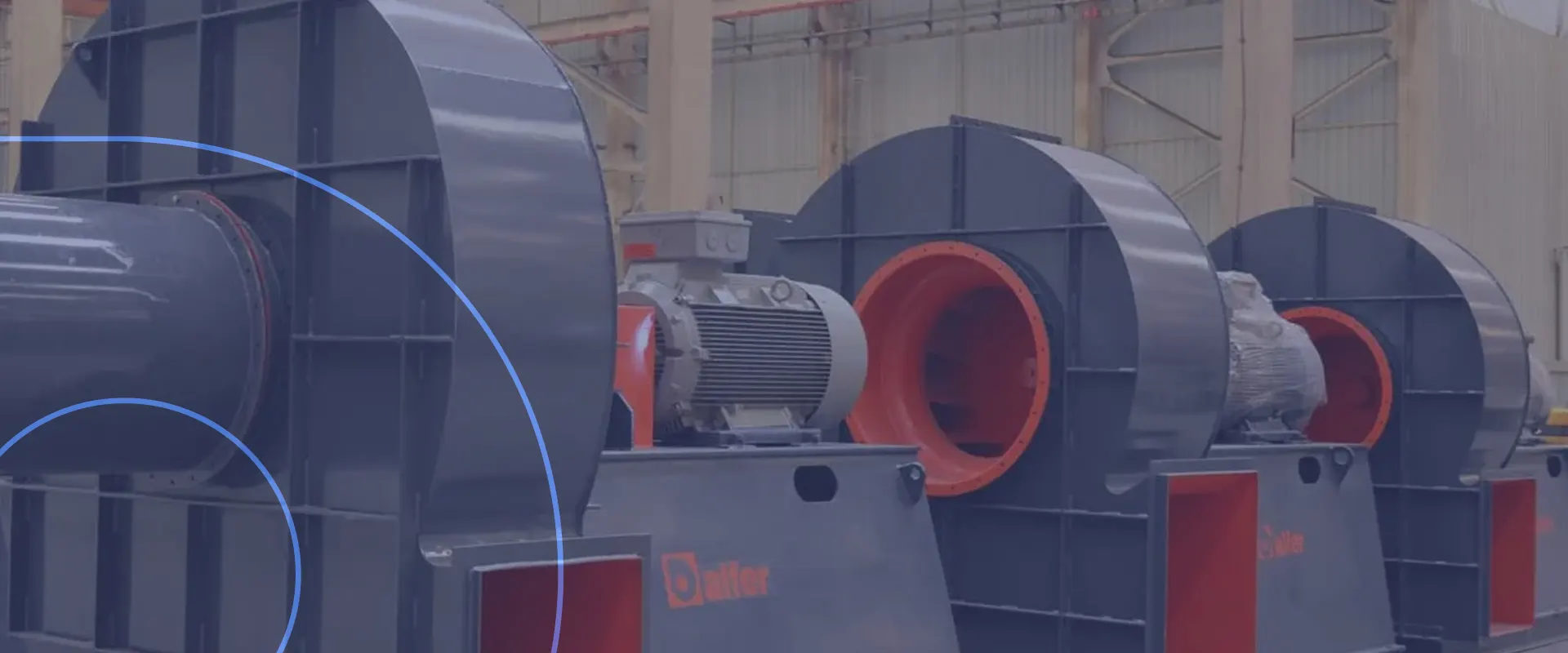
Air management in industrial facilities is one of the fundamental elements that ensure production processes operate efficiently, safely, and sustainably. Especially in heavy industries such as cement, mining, steel, and MDF/particleboard production, proper airflow planning is not a preference but an operational necessity due to high temperatures, heavy dust loads, and dynamic process conditions. In this context, industrial fan systems are at the core of air management, directly impacting overall plant performance and energy costs.
Dust, toxic gases, and high heat loads generated during industrial production can pose serious risks to both employee health and equipment lifespan if not properly controlled. Imbalanced airflow can lead to unexpected system downtime. In this context, a properly engineered industrial fan system provides the following key advantages:
Air management is not simply about purchasing equipment; it requires a comprehensive engineering process. Industry leaders such as Alfer Engineering manage this process using advanced analytical methods.
The required airflow rates at different points in the system should be determined through advanced CFD (Computational Fluid Dynamics) simulations. These digital analyses help identify turbulence in advance, allowing the optimal positioning of industrial fan systems and duct designs.
While axial fans are typically used for general ventilation, heavy-duty radial fans are preferred in processes requiring high pressure and the transportation of dense dust loads. Alfer’s radial fan designs are equipped with hard-facing (armoring) technology that provides high resistance against abrasive particles, particularly in cement and metallurgical applications.
Air management planning cannot be considered independently from filtration solutions. A properly designed industrial fan system, working in synchronization with jet-pulse bag filters and dust collection units, captures particles at the source, prevents system blockages, and maximizes air quality within the facility.
A well-designed air management plan must prove its performance in real operating conditions, not just on paper. One of the key differentiators of Alfer Engineering is its in-house fan test laboratory, compliant with ISO 5801 standards. Every industrial fan is tested under real operating conditions before delivery. This ensures that clients receive not just a product, but a validated performance solution.
In facilities where system performance has declined or capacity increases are required, replacing the entire system is not always necessary. Through expert engineering analysis, retrofit projects can be implemented to improve existing systems. These retrofit solutions enhance the aerodynamic performance of existing fans, leading to both energy savings and extended operational lifespan.
Why is air management strategic in industrial facilities?
Because it involves not only ventilation but also heat balance, dust control, and energy optimization.
What are the key criteria for industrial fan selection?
In addition to airflow and pressure requirements, gas temperature, particle content, and system resistance are critical factors.
How does CFD analysis affect fan performance?
CFD simulations model airflow digitally, helping reduce turbulence and achieve optimal mechanical efficiency.
Why is ISO 5801 performance testing important?
It ensures that the fan delivers the specified performance values under real operating conditions according to international standards.
How does Alfer address wear and abrasion?
In sectors such as cement and mining, fan blades are protected with wear-resistant plates and armored designs to extend maintenance intervals.
To optimize your facility’s air management processes with Alfer Engineering’s tested technologies and CFD-supported solutions, contact our technical team today.
We use internet data cookies to improve our service quality. For detailed information, see our Cookie Policy page.
